
Ductless Heat Pumps: Your Ideal Alternative to Central Heating
- Nicholas Menezes
- 4 hours ago
- 8 min read

When it comes to What Are the Main Advantages of Ductless Heat Pumps Over Central Heating Solutions?, ductless heat pumps eliminate ductwork entirely, delivering zoned comfort through individual indoor units instead of one system pushing air through leaky ducts. Central heating loses energy through duct leaks and heats entire homes uniformly. Ductless systems installed by Colgrove Air target specific rooms, cutting energy waste and enabling room-by-room temperature control.
Why Are Homeowners Choosing Ductless Heat Pumps Now?
Rising energy bills and outdated ductwork push more Nova Scotia homeowners toward zone-based comfort systems. Colgrove Air, based in Upper Sackville, Nova Scotia, centers its work on heat pump systems designed specifically for local homes. That local focus matters when winters swing from mild to brutal within days.
The main advantages of ductless heat pumps over central heating solutions start with flexibility. Central air pushes conditioned air through a network of ducts from a single unit. Ductless mini splits skip the ducts entirely, using individual indoor units to heat or cool specific zones. Homes without existing ductwork, room additions, and finished basements benefit most from this setup.
Do ductless systems really cost less to run?
Operating costs depend on insulation, climate, and usage habits, but ductless systems avoid the energy losses that occur when air travels through leaky, uninsulated ductwork. Colgrove Air's ductless services aim to maintain comfortable indoor environments through Nova Scotia's seasonal swings while keeping overhead costs manageable for homeowners.
Are ductless heat pumps worth the upfront investment?
Upfront pricing varies by system size and installation complexity. A streamlined, low-overhead operating model helps keep installation and service pricing more accessible without cutting corners on workmanship.
Homeowners comparing options should weigh a few practical factors before calling a contractor:
Zoned control – heat or cool only the rooms in use, rather than conditioning an entire home at once
No ductwork required – ideal for additions, older homes, and converted spaces
Reduced energy waste – conditioned air reaches the room directly instead of traveling through ducts
Manageable pricing – a lean operating approach supports accessible service rates
For many households, ductless comfort simply fits the home better than retrofitting ducts ever could.
What Advantages Does Ductless Heating Offer?
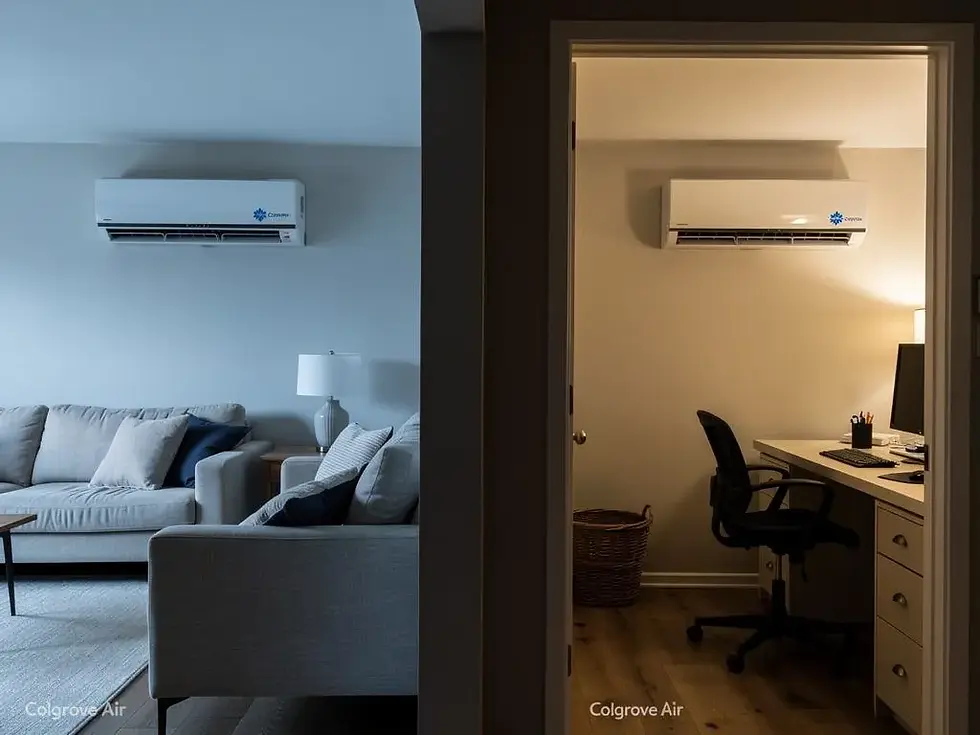
Room-by-room comfort control stands out as the clearest benefit ductless heat pumps deliver over whole-home systems. A bedroom can stay cool at night while a home office runs warmer during the day. Each indoor unit answers to its own thermostat. That kind of zoned command isn't possible with a single central thermostat governing every room through shared ductwork.
Energy efficiency ranks as the second major advantage. Ductless mini split systems avoid the energy losses that plague duct-based setups. Conditioned air travels through walls and attics before reaching a room. Homes without existing ductwork benefit especially. Installing ducts from scratch adds cost and construction disruption that a ductless unit sidesteps entirely.
Colgrove Air built its ductless heat pump installation service around exactly this scenario: older homes, additions, and converted spaces that never had ducts to begin with. The company also handles ducted heat pump installations, heat pump cleaning, and heat pump repair, giving homeowners flexibility no matter what their existing setup looks like.
Is ductless heating cheaper to maintain than central heating?
Maintenance costs stay predictable with Colgrove Air's service model. Heat pump cleanings are listed at 150 Canadian dollars, a transparent number rather than a quote that shifts after a technician arrives.
Does ductless heating sacrifice reliability for flexibility?
No. Colgrove Air pairs experienced technicians with a streamlined, low-overhead operation, keeping installation and repair pricing affordable without cutting corners on system performance.
Key advantages homeowners gain include:
Zoned comfort across bedrooms, additions, and converted spaces
Higher energy efficiency than ducted whole-home systems
No ductwork required, cutting installation disruption
Transparent maintenance pricing, starting with pricing varies cleanings
Experienced technician support backed by a low-overhead business model
For homeowners weighing a room addition or replacing an aging system, ductless heating solves the ductwork problem while keeping monthly energy bills in check.
How Does a Ductless Heat Pump Work?
Compact indoor units mount directly on interior walls, drawing heat from outdoor air and delivering it into individual rooms. This design solves a common problem for older properties. A ductless heat pump offers a convenient heating and cooling option for homes that were never built with ductwork. No demolition, no duct chases through closets, no lost storage space in the attic.
What Does a Basic Ductless System Include?
The simplest setup pairs one indoor air handler with a single outdoor compressor unit. Homeowners call this a single-zone configuration. It suits a room addition, a converted garage, or a finished basement that never got ductwork in the first place. Larger homes can scale up with multiple indoor heads connected to one outdoor unit, giving each room its own thermostat control.
What Happens During Installation and Maintenance?
Technicians run a small conduit between the indoor and outdoor units, carrying refrigerant lines and electrical wiring through a hole no wider than a few inches. Once running, the system needs periodic cleaning to keep airflow and efficiency steady over time. Colgrove Air's cleaning service lists an estimated duration and transparent pricing at 150 Canadian dollars. Homeowners know the cost before scheduling anything.
Behind every installation stands an experienced technician team focused on results that improve comfort. Peace of mind long after the truck leaves the driveway. That combination of straightforward mechanics and dependable service explains why. Many homeowners without existing ducts turn to ductless systems first when replacing an aging furnace or adding conditioned space to a home.
Is Ducted or Ductless Right for You?
Home layout decides the answer more than personal preference. Older houses without existing ductwork, room additions, and finished basements tend to favor a ductless setup. Whole-home installations with existing duct networks often lean toward a central system. Colgrove Air installs both configurations, giving homeowners a choice built around their specific space rather than a one-size-fits-all recommendation.
Central heat pumps push conditioned air through ductwork to reach every room in the house. This setup integrates with a traditional thermostat, so the transition from an existing furnace or AC system feels familiar. The tradeoff is inflexibility: one thermostat setting controls the whole home, and rooms far from the ductwork sometimes run warmer or cooler than intended.
What are the main advantages of ductless heat pumps over central heating solutions?
The clearest advantages of ductless heat pumps over central heating systems come down to zoning and installation flexibility. Ductless units heat and cool individual rooms independently, which matters most in additions, converted attics, or older Nova Scotia homes that never had ducts installed. No ductwork also means fewer installation barriers and less disruption to existing walls and ceilings.
Which system fits a specific home better?
The decision comes down to three factors:
Duct availability — existing ducts favor a central system; none favors ductless
Zoning needs — multiple temperature preferences point toward ductless
Renovation scope — additions without ducts almost always call for a ductless unit
Colgrove Air's technicians evaluate layout and duct access before recommending ducted or ductless installation, ensuring the final choice matches how the home actually gets used.
What Else Should You Consider Before Installing?
Home electrical capacity often determines whether a heat pump project moves forward smoothly or stalls midway. Homes without ductwork face a different set of decisions than those already wired for high-demand equipment. Those decisions extend past the heat pump itself. Colgrove Air rounds out its heating and cooling work with electrical panel upgrades. Generator panel or GenerLink installations, giving older homes the electrical resilience needed to support new equipment and back up the household during outages.
Location matters too. Colgrove Air operates out of Upper Sackville, Nova Scotia, Canada, putting local knowledge of the region's homes and climate close to the properties it serves.
Does Colgrove Air serve areas outside Upper Sackville?
Residential service centers on Upper Sackville and reaches into nearby Nova Scotia communities, including Lower Sackville. Homeowners in these surrounding areas get the same access to installation, maintenance, and repair support.
How does someone schedule a consultation or get pricing?
Reaching the team takes three simple routes: phone, email, or the online booking system. Each option lets homeowners arrange service times and request pricing for installation or upgrade projects without waiting on a callback.
Before committing to any system, homeowners should weigh a few practical factors:
Electrical readiness — does the panel support new equipment, or does it need upgrading first?
Backup power needs — would a generator panel or GenerLink solution add peace of mind during storms?
Ongoing upkeep — routine maintenance and repair support keep newly installed systems running efficiently for years.
Contact method — phone, email, or online booking, whichever fits the homeowner's schedule best.
Addressing these details upfront prevents delays once installation day arrives.
Ductless heat pumps deliver measurable advantages over traditional central heating systems through superior energy efficiency, flexible installation, and zone-based temperature control. Their streamlined design eliminates the infrastructure demands of ducted systems while maintaining consistent comfort across your home. For Nova Scotia homeowners seeking reliable, cost-effective climate solutions, ductless heat pumps represent a practical investment in both immediate comfort and long-term operational savings. Colgrove Air's experienced technicians stand ready to evaluate your specific needs. Guide you toward the heating and cooling system that best serves your household.
FAQ
How do ductless heat pumps save energy compared to central heating?
Ductless systems avoid the energy losses that occur when air travels through leaky, uninsulated ductwork. Conditioned air reaches each room directly through individual indoor units instead of traveling through walls and attics.
What makes ductless heat pumps a good fit for older homes or additions?
Ductless mini splits skip ductwork entirely, making them ideal for homes without existing ducts, room additions, and finished basements. Colgrove Air, based in Upper Sackville, Nova Scotia, built its installation service around exactly these scenarios.
Can each room have its own temperature with a ductless system?
Yes, each indoor unit answers to its own thermostat, allowing zoned control room-by-room. A bedroom stays cool at night while a home office runs warmer during the day, unlike a single central thermostat.
How do I decide between a ducted or ductless heat pump for my home?
The choice comes down to duct availability, zoning needs, and renovation scope. Homes with existing ductwork often suit a central system, while homes without ducts, room additions, and converted spaces typically favor a ductless setup. Colgrove Air's technicians evaluate layout and duct access before recommending either option.
Does Colgrove Air serve areas outside Upper Sackville?
Yes. Residential service centers on Upper Sackville and reaches into nearby Nova Scotia communities, including Lower Sackville, giving homeowners in surrounding areas the same access to installation, maintenance, and repair support.
Facts
Colgrove Air is located in Upper Sackville, Nova Scotia, Canada.
Conclusion
Choosing between a ductless and a central heating system comes down to how a home is built and how a household actually lives in it. Ductless mini splits solve the ductwork problem outright, giving homeowners zoned control room by room while cutting the energy losses that come with air traveling through leaky, uninsulated ducts. For additions, older homes, and converted spaces that never had ducts to begin with, that flexibility is hard to match with a central system.
Cost and reliability don't have to be tradeoffs either. Transparent maintenance pricing and a streamlined, low-overhead operating model keep installation and service accessible without sacrificing workmanship. Colgrove Air's technicians evaluate each home's layout and electrical readiness before recommending ducted or ductless installation, so the final decision fits the property rather than a generic recommendation. For Upper Sackville and Lower Sackville homeowners weighing a room addition, an aging system, or a home that's simply due for an upgrade, ductless heat pumps remain a practical, energy-efficient path forward.


Comments