
How Do Ducted and Ductless Heat Pumps Compare in Efficiency?

Ductless heat pump installation uses mini-split indoor heads mounted in individual rooms, creating flexible zones without ductwork, while ducted systems route air through a centralized duct network for whole-home comfort. Ductless suits homes lacking ducts or needing targeted zoning; ducted suits homes wanting uniform temperatures and centralized filtration. Colgrove Air installs both configurations across Nova Scotia homes.
How Do Ductless and Ducted Systems Differ?
Distribution method separates these two systems at the core. A ductless heat pump installation sends conditioned air through individual indoor units mounted in specific rooms. A ducted heat pump installation pushes air through a network of ducts to vents throughout the house. Colgrove Air, based in Upper Sackville, Nova Scotia, installs both configurations for homeowners across the region, so neither option gets pushed as the default answer. The right fit depends on the home itself, not a one-size-fits-all recommendation.
Several factors determine which system makes sense for a given property. Home size matters, as does layout, existing ductwork, local climate patterns, and budget. A bungalow without existing ducts often favors a different setup than a two-story home already fitted for forced air.
Factor | Ductless Favors | Ducted Favors |
Existing ductwork | Absent or outdated | Present and sound |
Layout | Multiple distinct zones | Open, connected floor plan |
Budget priorities | Lower upfront, room-by-room control | Whole-home consistency |
Renovation goals | Minimal structural change | Centralized, hidden equipment |
Which System Costs Less to Install?
Cost depends heavily on home layout, ductwork condition, and the scope of the project rather than a fixed number. Homes without ducts generally see lower installation complexity with a ductless setup. No ductwork needs to be built or repaired. Ducted systems can involve more labor when ducts require installation from scratch, but they also centralize equipment in one location. Colgrove Air evaluates each property individually before offering pricing guidance, keeping overhead low so homeowners get a fair, practical quote.
Can One Home Use Both Systems?
Hybrid setups exist for homes with mixed needs, such as a finished basement without ducts alongside a main floor that already has them. Pairing a ductless unit for an addition with a ducted system for the original structure solves layout problems that neither option handles alone. Colgrove Air's core service lineup covers both ductless and ducted heat pump installation. Homeowners aren't forced into a single configuration. That flexibility matters most for older Nova Scotia homes with patchwork renovation histories. No single system fits every room equally well.
Which System Fits Your Home's Layout?
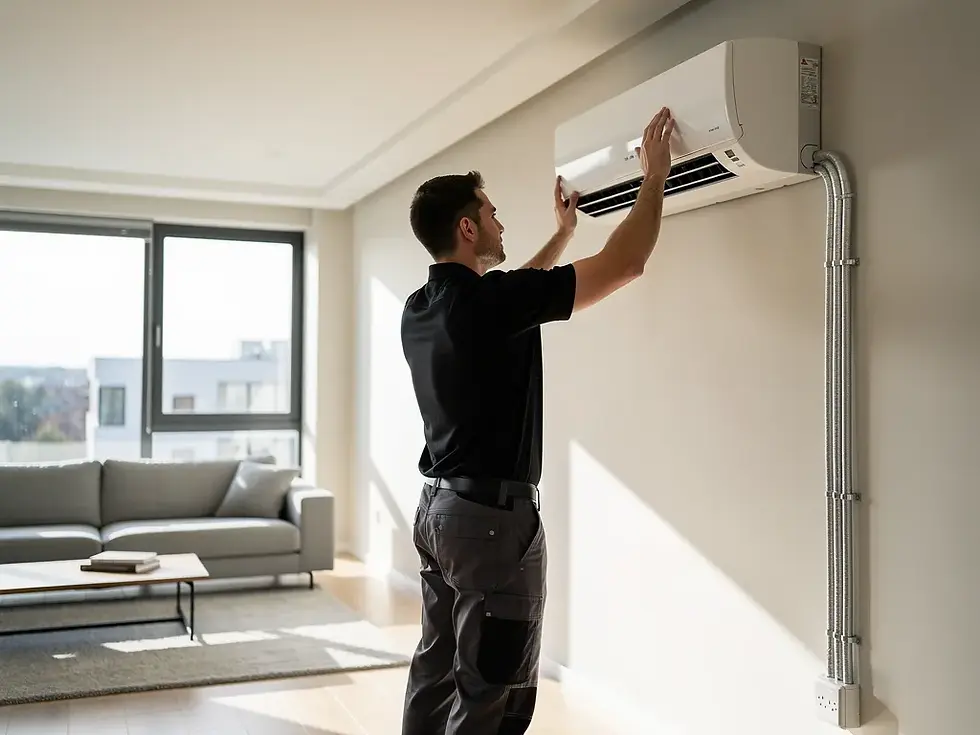
Home layout determines which heat pump configuration delivers the best results. Existing ductwork, room count, and floor plan all shape the decision between a centralized system and a zoned one.
A ducted heat pump, sometimes called a central heat pump, relies on a network of air ducts to move conditioned air from a central air handler into multiple rooms. Homes already fitted with ductwork, often shared with an existing furnace, tend to suit this setup well. New construction can also incorporate ducted systems from the planning stage, avoiding retrofit complications altogether.
A ductless heat pump takes a different path. Known widely as a mini-split system, this configuration skips ductwork entirely. Individual indoor units mount in specific rooms or zones, each wired to an outdoor compressor through refrigerant lines. Additions, converted spaces, and older homes without ducts often benefit most from this flexibility.
Does an older home without ductwork need a ductless system?
Homes lacking ductwork generally favor ductless installation, since adding ducts later involves significant construction work. A mini-split setup avoids that disruption by running refrigerant lines instead of sheet metal trunks. Older Nova Scotia homes with plaster walls or limited attic space often see faster, cleaner installations this way.
Can one home use both ducted and ducted systems?
Yes, many homeowners combine both. A ducted system handles the main living areas while a ductless unit covers a converted basement or garage addition. This hybrid approach suits homes with uneven layouts or rooms that fall outside the reach of existing ducts.
Colgrove Air installs both configurations, which means the recommendation fits the structure, not the other way around. That service mix also supports homeowners looking for dependable efficiency alongside ongoing maintenance and repair, whichever layout they start with.
What Will Installation Involve For Each System?

Installation scope depends on the system type, with ductless heat pump installations requiring far less structural work than ducted heat pump installations. A mini-split project typically involves mounting indoor units, running a small conduit to an outdoor compressor, and testing the connection. A central system demands ductwork inspection, air handler placement, and often more extensive home access.
Local installation professionals play a central role in determining which approach fits a given property. Hiring a qualified technician helps homeowners select the right system for their layout and ensures the work proceeds without unnecessary cuts into walls or floors.
Does Installation Ever Require Electrical Upgrades?
Older homes sometimes lack the electrical capacity a new heat pump needs, especially for larger ducted systems. Colgrove Air addresses this through complementary electrical services, including panel upgrades and generator panel installations. Homeowners get the added capacity their project requires without hiring a separate contractor.
How Long Does Each Installation Take?
Timelines vary by project complexity and home layout. Select installation services list estimated durations and, where pricing applies, transparent cost figures, giving homeowners a clearer picture before work begins.
Factor | Ductless | Ducted |
Structural work | Minimal | Moderate to extensive |
Electrical needs | Sometimes | More common |
Typical access required | Single wall penetration per zone | Attic or crawlspace ductwork |
Scheduling a project is straightforward. Homeowners can reach Colgrove Air by phone, email, or online booking to arrange a service time and request pricing for either installation path.
How Do Costs And Efficiency Compare?
Ductless heat pump installations generally cost less to purchase than ducted heat pump systems, though running costs depend on how a home is heated and cooled day to day. According to Angi, ductless units range from $1,300 to $8,000 per unit, while ducted installations run from $2,500 to $10,000. That gap matters for Nova Scotia homeowners weighing upfront budget against long-term comfort goals.
Factor | Ductless Mini-Split | Ducted System |
Typical cost | $1,300 to $8,000 per unit | $2,500 to $10,000 installed |
Efficiency style | Room-by-room zoning | Whole-home consistency |
Best fit | Additions, targeted zones | Full-house comfort |
Angi notes that ductless systems tend to run more efficiently because occupants control temperatures room by room, while ducted systems trade some of that precision for steady, consistent comfort across every room. Neither approach is outdated, either. Aire Serv points out that technological developments have vastly improved the energy efficiency of both ducted and ductless systems in recent years, narrowing the performance gap that once existed between them.
Which System Saves More Money Over Time?
Savings depend on household habits, not just equipment type. A ductless setup can cut costs in homes where only a few rooms need regular conditioning. A ducted system often pays off in larger homes needing even comfort throughout.
Colgrove Air delivers reliable, affordable heat pump solutions across installations, repairs, and cleanings, relying on a streamlined, low-overhead operation that keeps pricing manageable for homeowners weighing either option.
Which System Should You Choose For Your Home?
A home's layout and existing ductwork determine the better fit between a ductless mini-split system and a ducted heat pump installation. Older Nova Scotia homes without existing ducts often favor ductless zones. Properties already wired for forced air lean toward ducted setups. Homeowners should assess their home's layout and existing ductwork as the first step. Retrofitting ducts into a home that never had them adds cost and complexity that a zoned ductless system avoids entirely.
Colgrove Air's experienced team focuses on delivering results that enhance comfort. Peace of mind on every installation, whatever the home's configuration. That expertise, paired with responsive communication, shapes practical and cost-conscious recommendations for Nova Scotia households rather than a one-size-fits-all sales pitch.
Home Situation | Likely Better Fit |
No existing ductwork, room-by-room needs | Ductless mini-split |
Existing ducts, whole-home comfort priority | Ducted system |
Addition or renovation without duct access | Ductless mini-split |
Does Colgrove Air Install Both System Types?
Yes, installation decisions get matched to the specific property, not a default product line. Residential customers throughout Upper Sackville and surrounding communities, including Lower Sackville, receive recommendations built around their home's structure and comfort goals.
FAQ
What is the main difference between ductless and ducted heat pump installations?
Ductless systems use individual indoor units mounted in specific rooms, creating flexible zones without ductwork. Ducted systems push air through a network of ducts to vents throughout the house for whole-home distribution.
Which system costs less to install?
Homes without existing ducts generally see lower installation complexity with a ductless setup since no ductwork needs building or repairing. Ducted systems involve more labor when ducts require installation from scratch. Colgrove Air evaluates each property individually before offering pricing guidance.
Can a home combine both ductless and ducted systems?
Yes, hybrid setups work well for homes with mixed needs, such as a ductless unit for an addition paired with a ducted system for the original structure. Colgrove Air installs both configurations, giving homeowners flexibility instead of forcing a single system choice.
Conclusion
In closing, the choice between ductless and ducted heat pump systems depends on your home's layout, existing infrastructure, and comfort priorities. Both technologies deliver efficient heating and cooling when properly installed and maintained, offering reliable performance throughout Nova Scotia's varied seasons. Your certified technician will assess your specific needs. Guide you toward the solution that maximizes efficiency while keeping your system cost-effective and dependable for years to come.


Comments