
Ductless Heat Pump vs Ducted Heat Pump: The Differences

Updated: May 11

Most homeowners don't think about their heating and cooling system until something goes wrong, and by then, the pressure to make a quick decision can lead to the wrong one. Whether you're replacing an old system or setting up a home for the first time, the choice between a ductless heat pump vs ducted heat pump is one of the most important calls you'll make for long-term comfort and energy costs.
This post breaks down exactly how the two systems differ, what each one is best suited for, and how to figure out which one belongs in your home.
Quick Verdict: Ductless vs Ducted Heat Pumps at a Glance
For most homes without existing ductwork, a ductless mini-split is the faster, less expensive, and more flexible path to efficient heating and cooling. For homes already connected to a duct network in good condition, a ducted heat pump swap is often the smarter investment. However, neither system is universally better. The winning choice comes down to three things:
Whether your home already has ductwork, and how good it is.
How much zone-by-zone temperature control you want.
Your budget for upfront installation vs. long-term energy savings.
How Heat Pumps Work (Ducted and Ductless Explained)
A heat pump doesn't generate heat; it moves it, which is why it can be dramatically more efficient than a furnace or electric baseboard heater. Both ducted and ductless versions share the same refrigerant-based technology at their core, but diverge completely in how they deliver conditioned air to the rooms you live in.
How Ducted Heat Pumps Work
A ducted heat pump uses a central air handler located in a utility closet, basement, or attic. The refrigerant cycle runs between the outdoor unit and this air handler, which heats or cools a coil. A blower fan then pushes conditioned air through a network of ducts to every room in the house, with supply vents distributing air and return vents pulling it back. A single thermostat typically controls the whole system, making this a whole-home solution by design.
How Ductless Heat Pumps Work
A ductless system uses the same refrigerant-based heat exchange principle but skips the ductwork entirely. An outdoor compressor connects via refrigerant lines to one or more wall-mounted indoor air handlers, often called heads. Each head serves a specific room or zone and has its own controls, usually a remote or a connected app. Because refrigerant travels directly to the room rather than through ducts, there is no air distribution network to lose energy through. Multi-zone systems can connect several indoor heads to a single outdoor unit.
Ducted vs. Ductless Heat Pumps: Key Differences
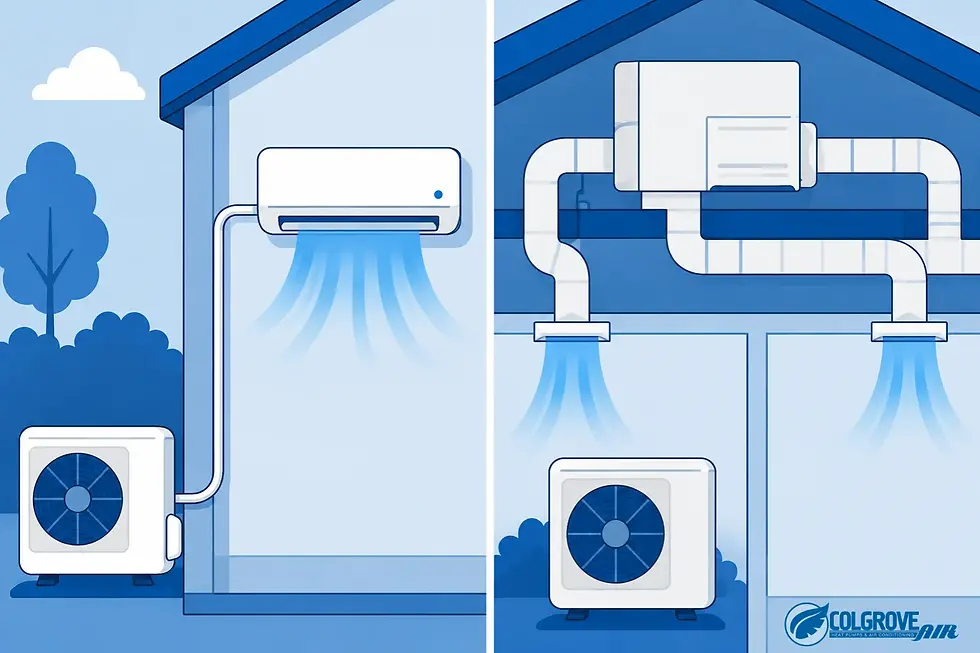
When you compare a ductless heat pump side by side with a ducted heat pump, the differences go well beyond whether it has ducts. From how each system handles a cold snap to what it costs to run month after month, the two systems differ across several factors that can make or break the fit for your home.
How Air Gets Distributed
This is the most fundamental difference between the two systems.
A ducted system pushes conditioned air through a network of insulated ducts hidden inside your walls and ceilings, exiting through vents in each room. A ductless system skips all of that as refrigerant lines run directly from the outdoor compressor to wall-mounted indoor units, which heat or cool the air right in the room.
One moves air through a building-wide network; the other conditions each space directly at the source.
Installation Requirements
Ducted systems require a full duct network, which is a major advantage if your home already has one from a furnace or central AC. If it doesn't, installing new ductwork is invasive, time-consuming, and expensive.
Ductless systems require only a small hole in the wall for refrigerant lines, making them far easier to install in older homes, additions, garages, or any space where running ducts simply isn't practical.
Room-by-Room Temperature Control
With a ducted system, a single thermostat typically controls the temperature for the entire home. Zoning is possible but requires additional dampers and controls, adding cost and complexity.
Ductless systems are zoned by design; each indoor head has its own thermostat so that different rooms can be set to different temperatures at the same time. For households where one person runs hot and another runs cold, this alone can be a game-changer.
Upfront Equipment Costs
Cost is often the first thing homeowners ask about, and the honest answer is that neither system is always cheaper; it depends almost entirely on what your home already has. A ducted heat pump is typically the more affordable option when good ductwork is already in place, while a ductless mini-split becomes the cost-effective choice when ducts don't exist or aren't worth salvaging.
Performance in Extreme Cold
Older heat pumps struggled in subfreezing temperatures, but modern cold-climate models, particularly ductless mini-splits, have changed that entirely. Many ductless systems maintain full or near-full heating capacity down to -13°F (-25°C), making them genuinely viable for cold Canadian winters. Ducted heat pumps have also improved in cold-weather performance, though ductless systems tend to lead in low-temperature efficiency ratings.
Maintenance Demands
Both systems need regular filter cleaning, but how you access those filters differs. Ductless indoor heads have easily accessible filters that most homeowners can clean themselves every few weeks. Ducted systems also require periodic professional inspection and cleaning, since dust, debris, and even mold can accumulate inside the duct network over time; something you simply don't have to worry about with a ductless setup.
Energy Efficiency: Do Ductless Mini-Splits Really Beat Ducted Systems?
In most cases, yes, and the reason is due to duct leakage. Even a well-installed duct system can lose 20-30% of conditioned air through leaks, gaps, and thermal transfer, especially when ducts run through unconditioned spaces like attics or crawlspaces. That's energy you're paying for that never reaches your living space.
Ductless systems eliminate that loss entirely. Refrigerant travels directly to the indoor unit in the room you want conditioned, with no intermediary network to leak from. Many ductless mini-splits carry SEER2 ratings well above standard ducted systems, meaning they deliver more heating and cooling output per dollar of electricity consumed.
That said, a ducted system in a well-sealed, well-insulated home with short duct runs can still be highly efficient. The efficiency gap narrows significantly when ductwork is in excellent condition.
Here's a quick breakdown:
Ductless wins when ducts would run through unconditioned spaces, when zoning means you only heat occupied rooms, or when cold-climate performance is a priority
Ducted holds its own when ductwork is short, well-sealed, and entirely inside the conditioned space
The Pros and Cons of Ducted and Ductless Heat Pumps

Every heat pump system comes with its own set of trade-offs, and knowing them upfront saves you from expensive surprises down the road. Each system has clear strengths worth leaning into and real limitations worth planning around.
Ducted Heat Pumps
Pros:
Leverages existing ductwork; no new infrastructure needed
Fully hidden system with no visible indoor units
One system conditions the whole home
Familiar technology for most HVAC contractors
Cons:
Duct leakage can waste 20-30% of energy
Difficult and expensive to install where no ducts exist
Whole-home thermostat makes room-by-room control harder
Ducts need periodic inspection and cleaning
Ductless Heat Pumps (Mini-Splits)
Pros:
No duct losses; among the most efficient systems available
Zone-by-zone temperature control built in
Easy to retrofit into older homes, additions, and garages
Excellent cold-weather performance in modern models
Smaller installation footprint; just a small wall penetration
Cons:
Wall-mounted indoor units are visible
Multi-room setups can get expensive as indoor heads add up
Filters require regular cleaning every few weeks
Installation quality matters a lot; poor refrigerant line sizing hurts performance
How to Choose Between a Ductless and Ducted Heat Pump
Start with these questions before you make any decision:
Do you already have ductwork? If yes, and it's in good shape, a ducted heat pump is likely the most cost-efficient path forward. If the ducts are leaky or old, factor in remediation costs before assuming ducted is cheaper.
Are you heating a whole home or specific zones? A whole-home replacement often favours ducted. A garage, finished basement, sunroom, or home addition almost always favours a ductless system.
How cold does it get where you live? In climates with harsh winters, a cold-climate ductless mini-split will often outperform a standard ducted system at the temperatures that matter most.
How important is aesthetic? If visible wall units bother you, ducted keeps everything hidden. If efficiency and control matter more than looks, ductless is hard to beat.
What's your budget split? Are you optimizing for lower upfront costs or lower monthly energy bills? Ductless systems typically cost more to install across a full home, but can pay for themselves through efficiency gains over time.
If you're still not sure after working through those questions, a heat load assessment from a qualified technician will give you a definitive answer based on your home's actual size, insulation, and layout.
How Colgrove Air Helps You Choose and Install the Right Heat Pump System

At Colgrove Air, we've installed and serviced both ducted and ductless heat pump systems across a wide range of home types, from older homes being retrofitted for the first time to new builds where the system design starts from scratch. We don't have a preference between the two, but as a locally trusted HVAC contractor in Upper Sackville, our job is to determine which option makes the most sense for your home, your budget, and your comfort goals.
Here's what working with us looks like:
Honest Assessment: We evaluate your existing ductwork (if any), your home's insulation, and your heating and cooling load before recommending anything
Full Installation and Follow-up: Whether it's a ductless mini-split in a basement addition or a whole-home ducted system upgrade, we handle it start to finish
Local Expertise: We understand the climate demands in our service area and recommend systems sized and rated for real local winters, not just ideal conditions
If you're unsure about your options and want a straightforward answer from people who install both every day, we're ready to help. Call us at 902-830-1676 or request a free quote online, and we'll point you in the right direction.
Final Words on Ducted vs Ductless Heat Pumps
Choosing between a ductless heat pump and a ducted heat pump comes down to your home's existing infrastructure, your comfort priorities, and your budget. Homes with solid ductwork already in place tend to favour ducted systems; homes without ducts or with zones that need independent control are almost always better served by a ductless mini-split. Either way, both systems are a meaningful upgrade in efficiency and comfort over older heating and cooling technology.
Not sure which one is right for your home? The team at Colgrove Air is happy to help you figure it out and implement the solution. Call us at 902-830-1676 or request a quote online today!


Comments