
Ducted vs Ductless Heat Pumps: Which Is Best?

Choosing between ducted and ductless heat pumps depends on your home's existing infrastructure. Homes with ductwork benefit from ducted systems offering whole-home comfort. Ductless mini-splits excel in homes without ducts or requiring zone control. Colgrove Air in Upper Sackville, Nova Scotia recommends professional assessment to determine the most efficient, cost-effective solution for your specific situation.
Choosing between ducted and ductless heat pumps depends on your home's existing infrastructure. Homes with established ductwork benefit from ducted systems, while homes without ductwork suit ductless mini splits. For a two-family home with a total heat load of 60,000 BTU/hr, a properly sized ducted or ductless system both deliver efficient whole-home comfort.
Ducted and ductless heat pumps each suit different homes. Ductless systems deliver room-by-room efficiency without existing ductwork, while ducted setups distribute conditioned air through a central network. Whole-home heat loads reaching 60,000 BTU/hr often favor ducted solutions. Colgrove Air installs both, helping homeowners identify the right fit for their layout and budget.
Key Takeaways
Ducted heat pumps distribute conditioned air through existing ductwork, serving an entire home from one unit.
Ductless mini-split systems require individual wall units in each room, typically costing less to install upfront.
Homes in Nova Scotia with existing ductwork save significantly on installation by choosing a ducted heat pump system.
Ductless systems offer superior zoning control, allowing homeowners to heat or cool up to 8 separate zones independently.
How Do Ducted and Ductless Heat Pumps Actually Work?
Ducted heat pumps and ductless heat pumps both move heat rather than generate it — but the delivery method separates them completely. Understanding that difference — what are the differences between ducted heat pumps and ductless heat pumps for my home? — helps homeowners choose the right system before installation day.
What Does a Ducted Heat Pump System Look Like in a Home?
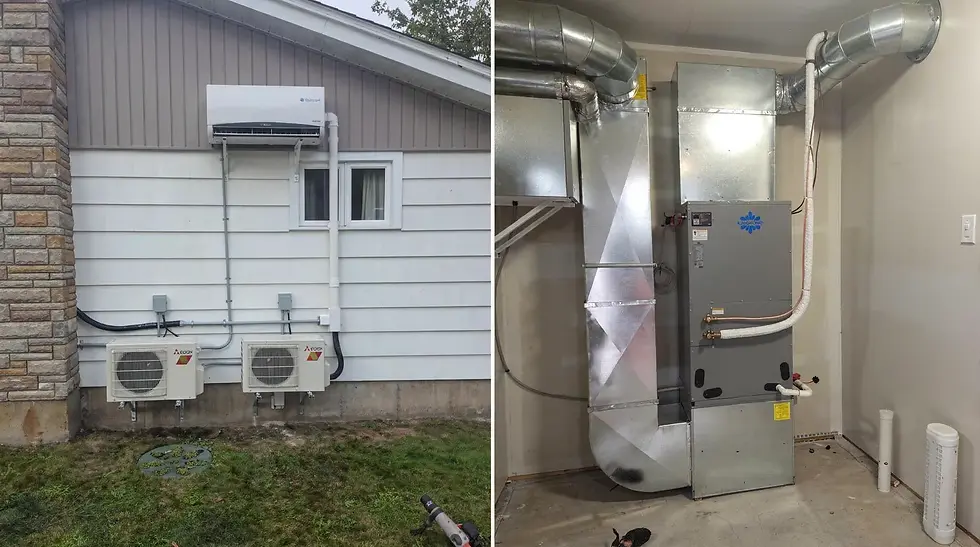
A ducted heat pump connects to a network of air ducts and vents built into the home's structure. Conditioned air travels through those ducts and exits at registers in each room. The same distribution method used by a traditional furnace or central air conditioner. Homeowners who already have existing ductwork often find this setup familiar and straightforward to integrate.
How Does a Ductless Mini Split Deliver Heating and Cooling?
A ductless mini split system takes a fundamentally different approach. The indoor air-handling unit mounts directly on the wall or ceiling of the space being conditioned, delivering heated or cooled air right where it is needed. No ductwork runs through the attic or crawlspace. That means no large, noisy air handler hidden out of sight — just a compact unit in the room itself.
Here is a side-by-side comparison of the two approaches:
Feature | Ducted Heat Pump | Ductless Mini Split |
Air distribution | Network of ducts and vents | Wall- or ceiling-mounted indoor unit |
Ductwork required | Yes | No |
Typical installation complexity | Higher | Lower for single zones |
Whole-home coverage | Yes | Yes (multi-zone configurations) |
Colgrove Air installs both ducted and ductless heat pump systems for residential customers throughout Upper Sackville and the surrounding Nova Scotia communities. Matching the right system to a home's layout is the first step toward reliable, efficient comfort year-round.
What Are the Core Pros and Cons of Each System?
Ductless heat pumps and ducted heat pumps each carry distinct advantages and trade-offs. Choosing between the two systems depends on a home's existing infrastructure, budget, and comfort priorities.
Factor | Ductless Heat Pump | Ducted Heat Pump |
Energy Efficiency | High — no duct-related energy loss | Moderate — duct losses reduce efficiency |
Installation Cost | Generally lower | Generally higher |
Air Distribution | Room-by-room, zoned | Centralized, whole-home |
Filtration | Per-unit filtration | Centralized, potentially more thorough |
Aesthetic Impact | Wall-mounted indoor units visible | Vents are low-profile |
Existing Ductwork Required | No | Yes |
Why Are Ductless Systems Considered More Efficient?
Ductless systems eliminate the heat loss and heat gain that occur inside conventional duct networks. Combined with variable-speed compressors — which adjust output to match demand rather than cycling on and off. Ductless mini splits consistently deliver strong efficiency performance. Homes without existing ductwork benefit most from this approach.
What Advantages Does a Ducted System Offer?
Ducted systems distribute conditioned air through a centralized network, reaching every room through vents. Homeowners who value consistent whole-home airflow and centralized filtration often find ducted systems appealing. However, installation costs are generally higher. Some HVAC professionals note that ducted configurations can be less efficient than their ductless counterparts when duct losses are factored in.
Homeowners evaluating either option should assess their home's layout, the presence of existing ductwork, installation complexity. Aesthetic preferences before committing. Colgrove Air provides both ductless heat pump installation, helping Nova Scotia homeowners identify the solution that best fits their specific circumstances.

Which System Suits Homes Without Existing Ductwork?
Ductless heat pump installation is the practical choice for homes that lack existing ductwork. Ductless systems connect indoor and outdoor units through a small conduit, eliminating the need for a full network of air ducts entirely.
Homes without ducts face a real cost penalty if owners pursue a ducted system. Retrofitting ductwork into finished walls and ceilings adds significant labor and material expense. Costs that a ductless installation sidesteps from the start. Ductless mini split systems are also compact and quiet. They consume considerably less energy than standard HVAC equipment, making them a strong fit for Nova Scotia homeowners focused on long-term efficiency.
Colgrove Air offers ductless heat pump installation as a core service, specifically designed for residential customers who want energy-efficient heating and cooling without the complexity of ductwork. The company's streamlined operating approach keeps overhead low, which translates directly into affordable pricing for homeowners across the region.
What Makes Ductless Installation Simpler Than Ducted?
Ductless systems require only a small conduit penetration through an exterior wall to link the indoor and outdoor units. No attic runs, no wall cavities opened up, and no supply registers to cut — the installation footprint stays minimal.
Is a Ductless System Still Efficient Without Ducts to Distribute Air?
Ductless systems deliver conditioned air directly into the living space, bypassing the energy losses that occur inside duct networks. That direct delivery keeps the system operating efficiently throughout Nova Scotia's heating and cooling seasons.
Key advantages for duct-free homes at a glance:
No ductwork retrofit required
Compact indoor units with low noise output
Lower energy consumption than conventional HVAC equipment
Streamlined installation process with minimal structural disruption
Affordable pricing supported by Colgrove Air's low-overhead service model

When Does a Ducted Heat Pump Make More Sense?
Ducted heat pumps make the most sense for homes that already have ductwork in good condition. Existing duct infrastructure removes the largest cost barrier, making a ducted system a practical and efficient upgrade path.
Does My Home's Existing Ductwork Qualify for a Ducted System?
Homeowners should assess both the layout and the condition of existing ductwork before committing to any system. Ducts that are well-sealed, properly sized, and in good repair represent an infrastructure investment that has already been made. A ducted heat pump simply puts that investment to work. A qualified technician can evaluate whether the existing setup supports efficient airflow distribution throughout the home.
Can a Ducted System Help Homeowners Qualify for Rebate Programs?
Certain rebate programs require that every partitioned, heated room in a home has a dedicated heat source. A single ducted air handler can distribute conditioned air to every room through the existing duct network, satisfying that requirement in a way that a single-zone ductless unit cannot. Homeowners pursuing rebate eligibility should confirm the specific requirements with their installer before selecting a system type.
Ducted systems tend to be the stronger choice when one or more of the following conditions apply:
The home already has functional, well-maintained ductwork
Whole-home coverage from a single air handler is a priority
Rebate program requirements mandate heating in every partitioned room
Aesthetic preferences favor concealed equipment over wall-mounted indoor units
Colgrove Air installs ducted heat pump systems and advises homeowners on whether their existing infrastructure supports this approach. Homeowners can contact Colgrove Air directly to arrange an assessment and determine the right system for their specific situation.
How Should Nova Scotia Homeowners Choose and Get Started?
Homeowners in Upper Sackville, Lower Sackville. Surrounding Nova Scotia communities have access to both ducted heat pump and ductless heat pump solutions through Colgrove Air. Selecting the right system depends on the home's existing infrastructure, room layout. Comfort priorities — and getting expert guidance early prevents costly missteps.
What Factors Should Homeowners Consider Before Choosing a System?
The decision between ducted and ductless systems hinges on a few practical questions. Does the home already have ductwork in good condition? Is whole-home distribution the goal, or is targeted room-by-room comfort more important? Answering these questions with a qualified technician ensures the chosen system matches the home's actual needs. Not just a general preference.
Key considerations include:
Existing ductwork — homes with intact ducts may benefit from a ducted installation
Room layout — open-concept spaces versus multi-room configurations affect system choice
Budget and efficiency goals — both system types offer energy-efficient performance at different installation cost points
Long-term comfort priorities — zoning flexibility, noise levels, and maintenance access all vary between options
How Can Homeowners Connect With Colgrove Air to Get Started?
Colgrove Air makes the first step straightforward. Residential customers can reach the team by phone, email. Through the online booking and contact options to arrange service times and request pricing for installation projects. The experienced team combines practical expertise with responsive communication, working to deliver results that genuinely improve indoor comfort. Peace of mind throughout Nova Scotia's demanding seasons.
FAQ
Do I need existing ductwork to install a ducted heat pump?
Yes, ducted heat pumps connect to a network of air ducts. Vents already built into the home's structure, distributing conditioned air through registers in each room.
How many zones does a ductless mini split system support?
Ductless systems allow homeowners to heat or cool up to 8 separate zones independently, giving room-by-room control without any ductwork running through the attic or crawlspace.
Which system costs less to install?
Ductless mini split systems generally cost less to install upfront. Homes in Nova Scotia with existing ductwork save significantly on installation by choosing a ducted heat pump system.


Comments